### The Puzzle of Trump's 2016 Victory
The debate over whether racial attitudes or economic distress drove voting behavior in the 2016 presidential election has been dominated by white voters, obscuring other groups' experiences.
#### Why This Matters
This study uses vote-validated data from the 2016 Cooperative Congressional Election Survey (CCES), merged with ZIP code and county-level economic indicators to reveal:
* Racial Attitudes & White Voters: Strongly predict voting choices among whites, aligning with existing literature.
* Economic Distress & Voter Participation: Significantly reduced turnout specifically among people of color.
### Key Implications
Local economic hardship may have discouraged participation across racial lines. This complicates direct comparisons between the effects of race and economy on vote choice, particularly for non-white voters. It underscores that factors influencing who votes—and whom they elect—are intertwined.
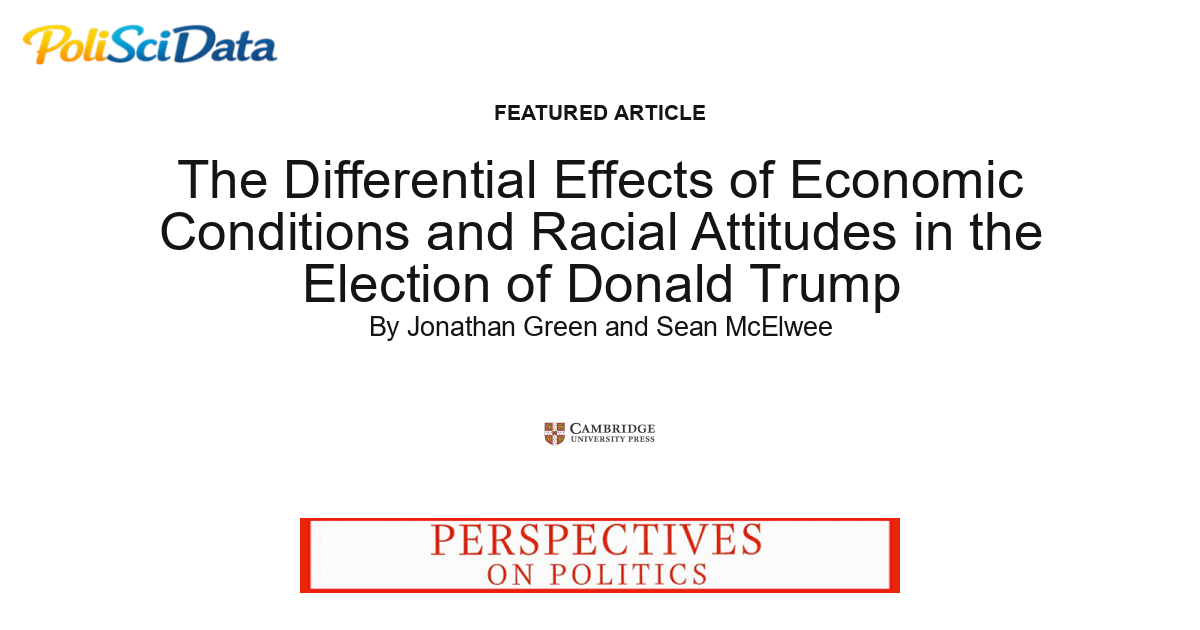
| The Differential Effects of Economic Conditions and Racial Attitudes in the Election of Donald Trump was authored by Jonathan Green and Sean McElwee. It was published by Cambridge in POP in 2019. |